- 1
- BLACKL
- TABLETAPPLE iPad Mini 8NEW iPad A16(2025) iPad 10.9" 10th (2022) iPad 10.2" (7th/8th/9th) iPad Air 13" (M2/M3/M4)(2024/2025/2026)NEW iPad Air 11" (M2/M3/M4)(2024/2025/2026)NEW iPad Mini 8.3" (A7 Pro/6th Gen) iPad Pro13"(M4/M5)(2024/2025) iPad Pro11"(M4/M5)(2026) iPad 9.7" (5th/6th Gen) iPad Pro 12.9"(2018-2022) iPad Pro 11"(2018-2022) iPad 9.7"(2th/3th/4th) iPad Air 10.9"(4th/5th Gen) iPad Mini 7.9"(4th/5th Gen)SAMSUNG Galaxy Tab A11 Galaxy Tab A11 Plus Galaxy Tab S11 Galaxy Tab S12 PlusNEW Galaxy Tab S12 UltraNEW Galaxy Tab A9+ Galaxy Tab A9 Galaxy Tab A8 Galaxy Tab A7 Galaxy Tab A7 Lite Galaxy Tab S11 Ultra/S10 Ultra/S9 Ultra/S8 Ultra Galaxy Tab S10+/S9+/S9 FE+ Galaxy Tab S10Lite/S10 FE/S9 FE/S9 Galaxy Tab S8+/S7+/S7 FE Galaxy Tab S8/S7 Galaxy Tab S6 lite Galaxy Tab A10.1 Galaxy Tab A8.4 Galaxy Tab A8.0 Galaxy Tab S10 FE+LENOVO iDea tab 11/Tab K11 Gen 2 /Xiaoxin Pad 11 2025 Lenovo Tab K9 (Tab One) 2025 Lenovo Tab M10 10.1"(2025) Lenovo Tab M10 Plus 10.6" (3rd Gen) Lenovo Tab M10 HD 10.1" (3rd Gen) Lenovo K10/M10 Plus 10.3" (2nd Gen) Lenovo Tab M10 HD 10.1" (2nd Gen)XIAOMI Redmi Pad 2 9.7 InchNEW Xiaomi Pad8/8Pro 11.2" Redmi Pad2/Pad2.4G Xiaomi Pad 6/6 Pro 11" Redmi Pad 10.61" Redmi Pad Se 11" Redmi pad Se 4G 8.7" Xiaomi Pad7/7 Pro 11.2" Redmi Pad Pro/Xiaomi Poco Pad/Redmi Pad2 Pro 12.1HUAWEI Huawei Matepad Se 10.4" Huawei Matepad 11" Huawei Matepad 11.5" Huawei Matepad SE 11" Huawei Matepad T8 8" Huawei Matepad T10 9.7"
- CATEGORIES
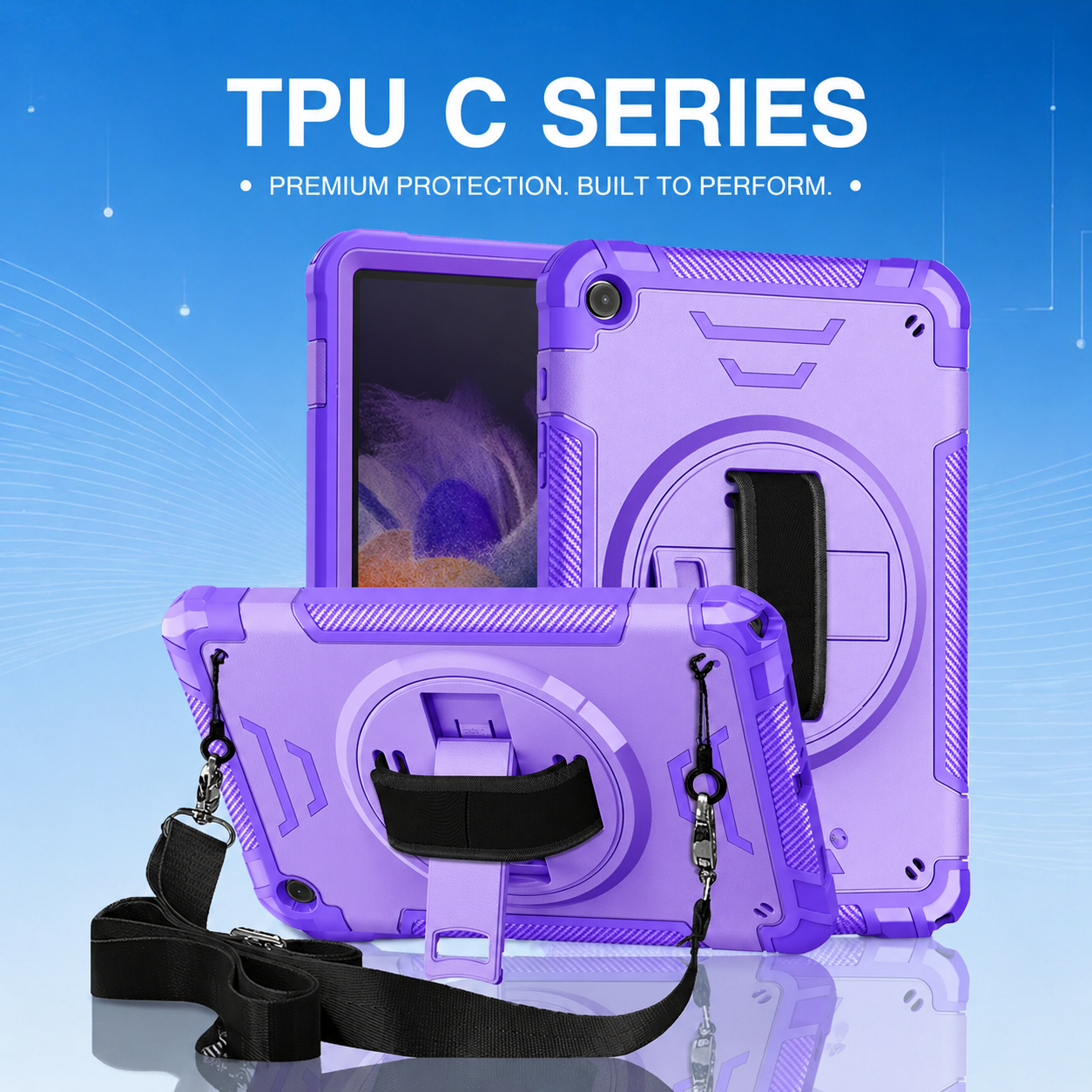
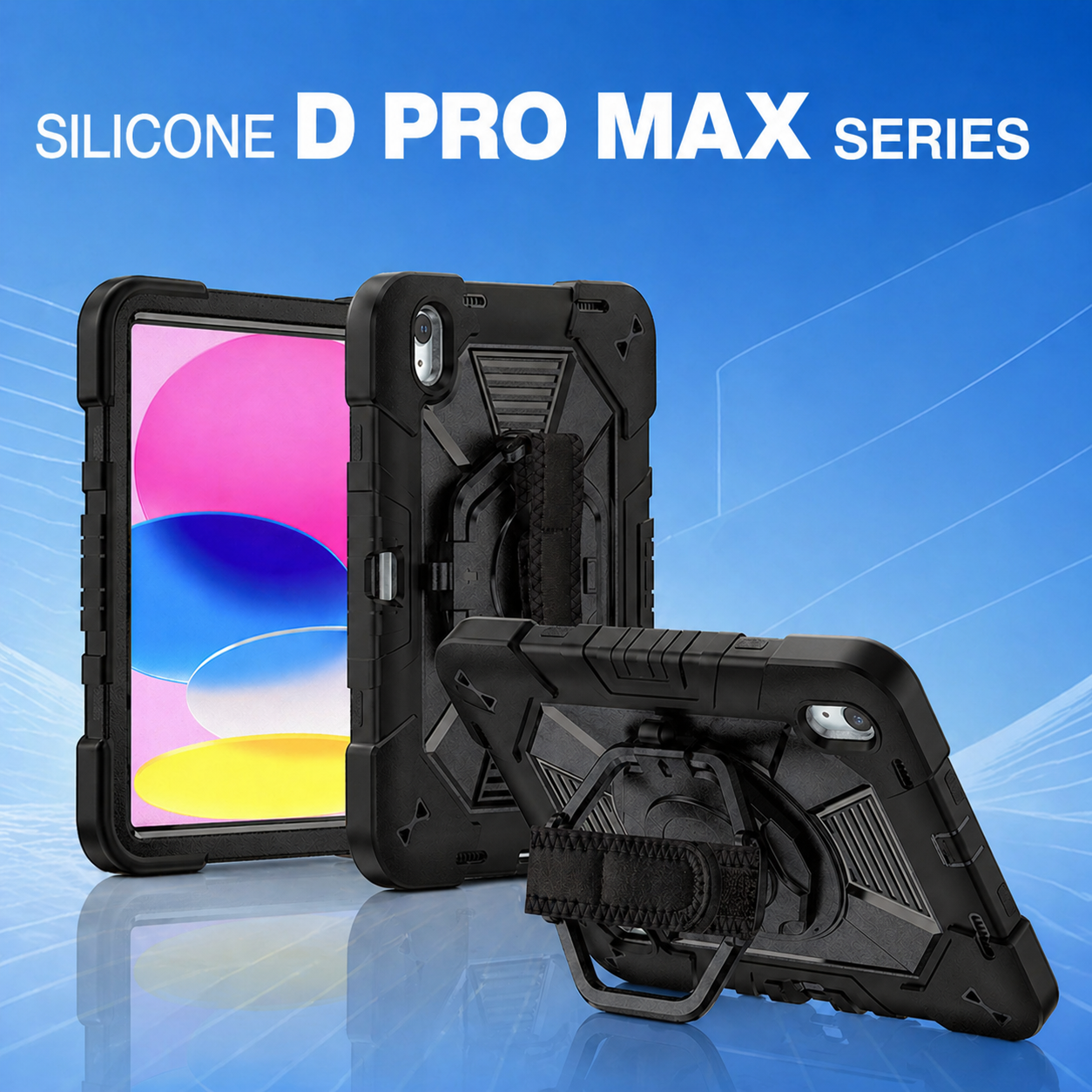
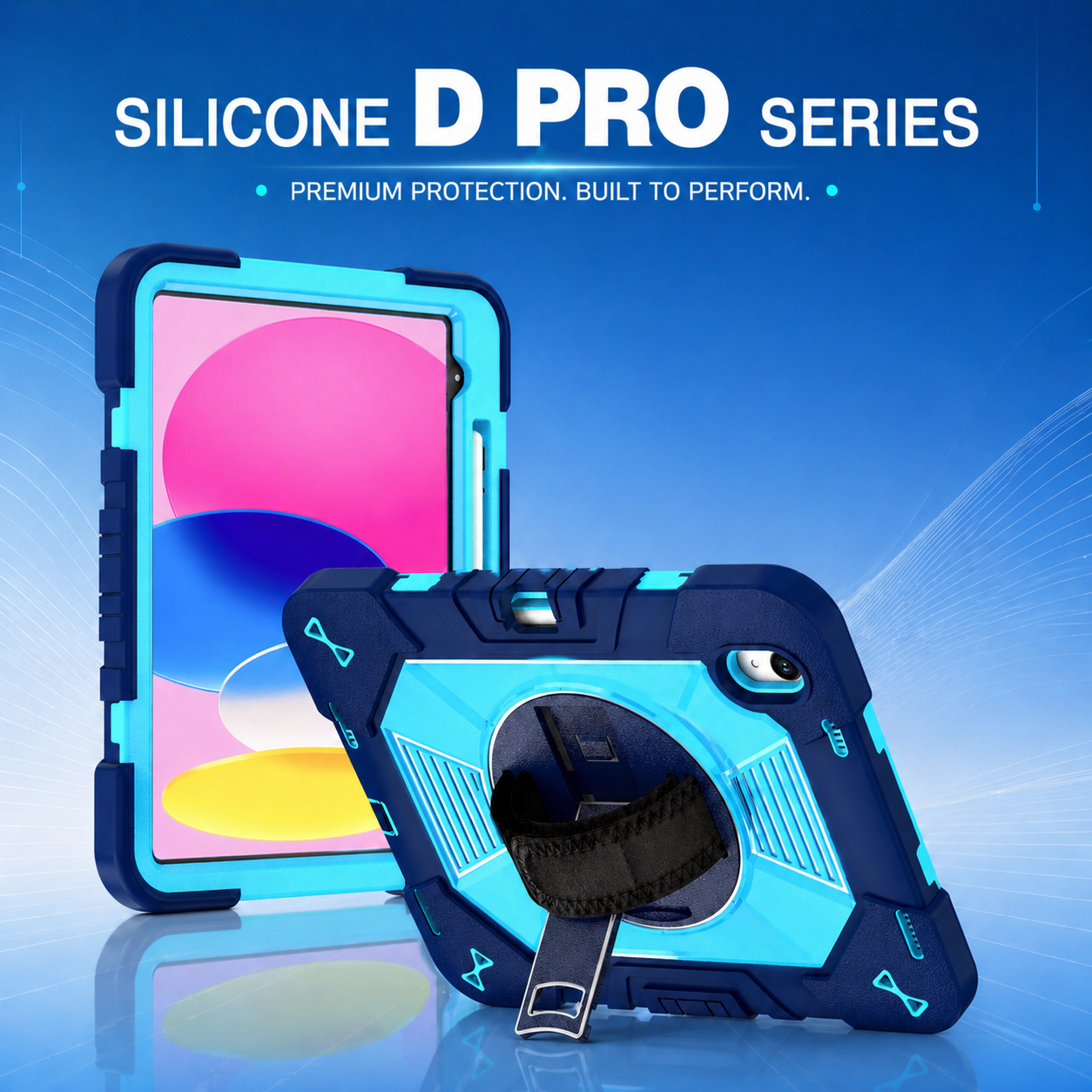
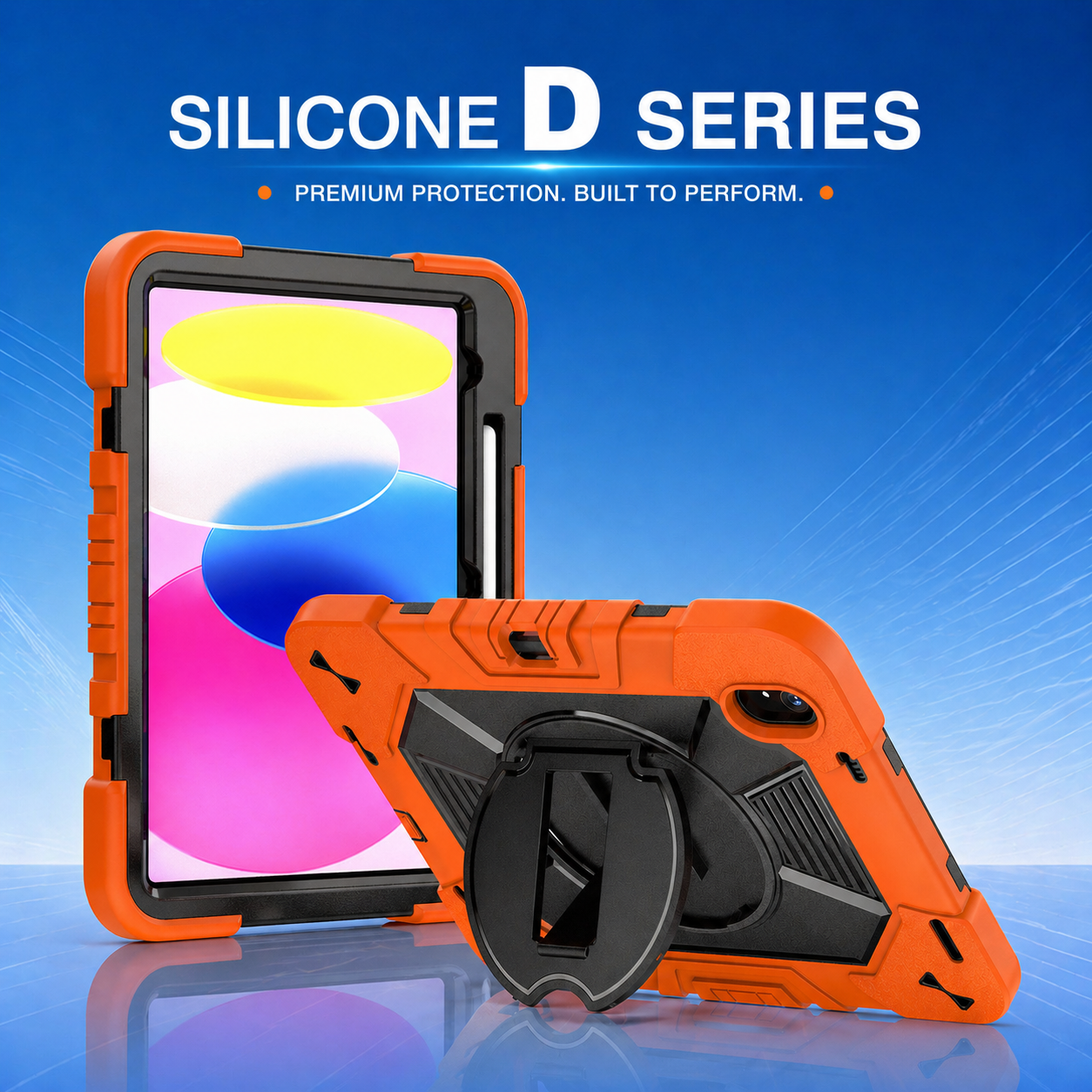

Protective Tablet Enclosure Market Outlook: Product Innovation and Buyer Strategy Through 2030
The protective tablet enclosure industry is entering a period in which product value will depend less on adding bulk and more on solving operational problems. Enterprise tablet fleets are expanding across logistics, healthcare, manufacturing, education, utilities, retail, and field service. At the same time, device portfolios are becoming more fragmented, product cycles are shortening, and buyers expect accessories to integrate with charging, mounting, scanning, and asset-management systems. These forces will shape how manufacturers design products and how business buyers select suppliers through 2030.
Growth Will Favor Application-Specific Products
Broad market forecasts generally point to continued expansion in rugged devices and enterprise mobility. The strongest case demand will come from deployments where downtime, repair labor, or lost productivity costs more than the protective accessory. This favors products built around a defined workflow rather than generic shells. A hospital may prioritize cleaning and secure carrying, while a warehouse needs impact protection and scanner access. A field technician may require a strap, rotating grip, and stable stand.
As a result, buyers will increasingly evaluate the complete system: case, screen protection, hand strap, shoulder strap, kickstand, mount, charging access, and packaging. Manufacturers that offer compatible modules can serve more segments without creating an entirely new product for every project.
Lighter Structures Will Replace Unnecessary Thickness
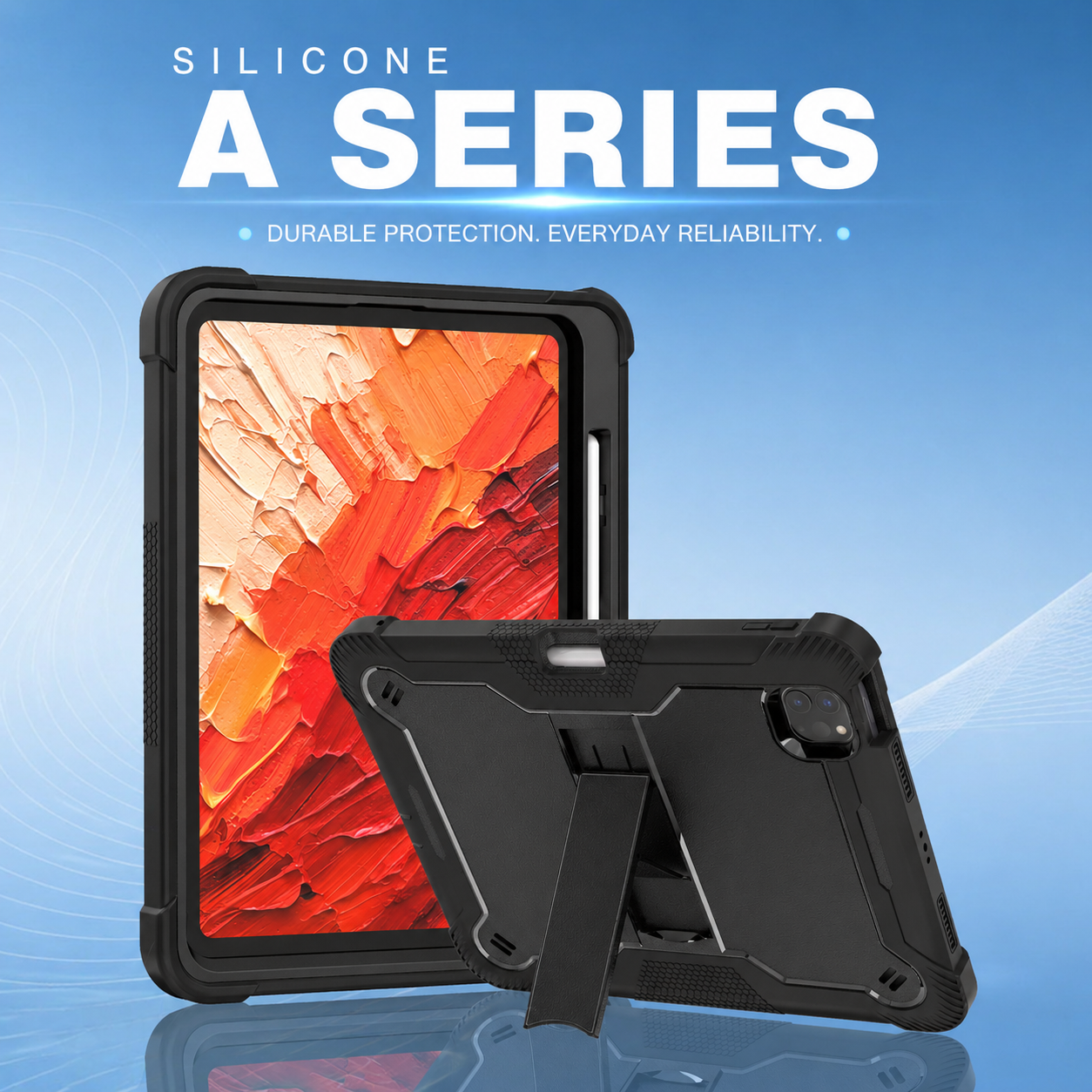
Protection will continue to improve, but weight and ergonomics will receive more attention. Engineers can use ribs, air pockets, flexible bridges, reinforced corners, and carefully controlled material transitions to manage impact energy. Better geometry allows a product to remain protective without becoming difficult to carry. A shockproof iPad tablet case will be judged not only by drop performance, but also by button feel, camera clearance, gesture access, and comfort during long shifts.
Hybrid construction will remain important. A PC+Silicone tablet case can combine structural stability with cushioning and grip, provided that the layers lock together reliably and do not separate during use. Manufacturers will focus on reducing weak interfaces, controlling shrinkage, and making soft components easier to clean. Recycled-content options and lower-waste packaging will attract more attention, but performance consistency will remain essential for enterprise programs.
Functional Hardware Will Become a Differentiator
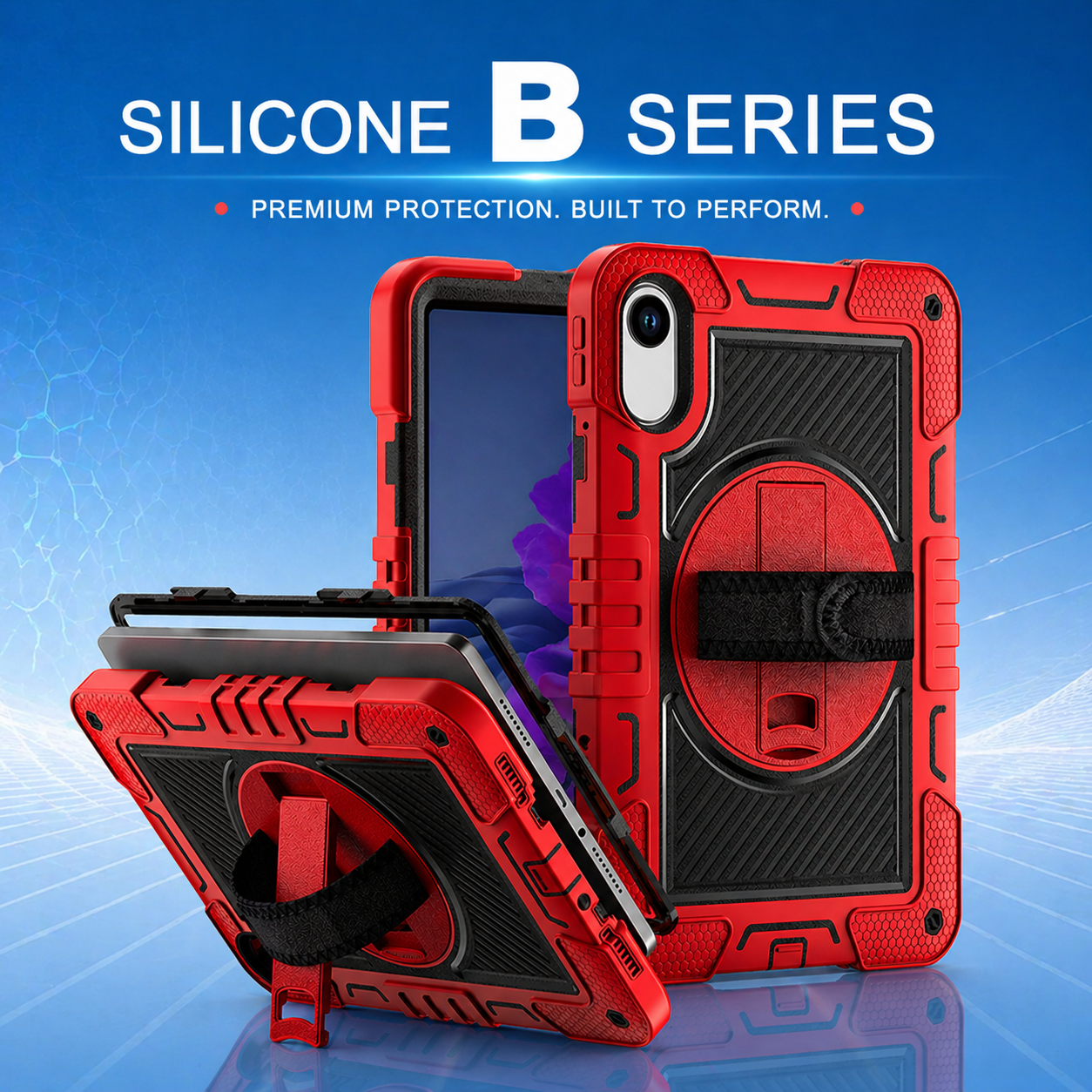
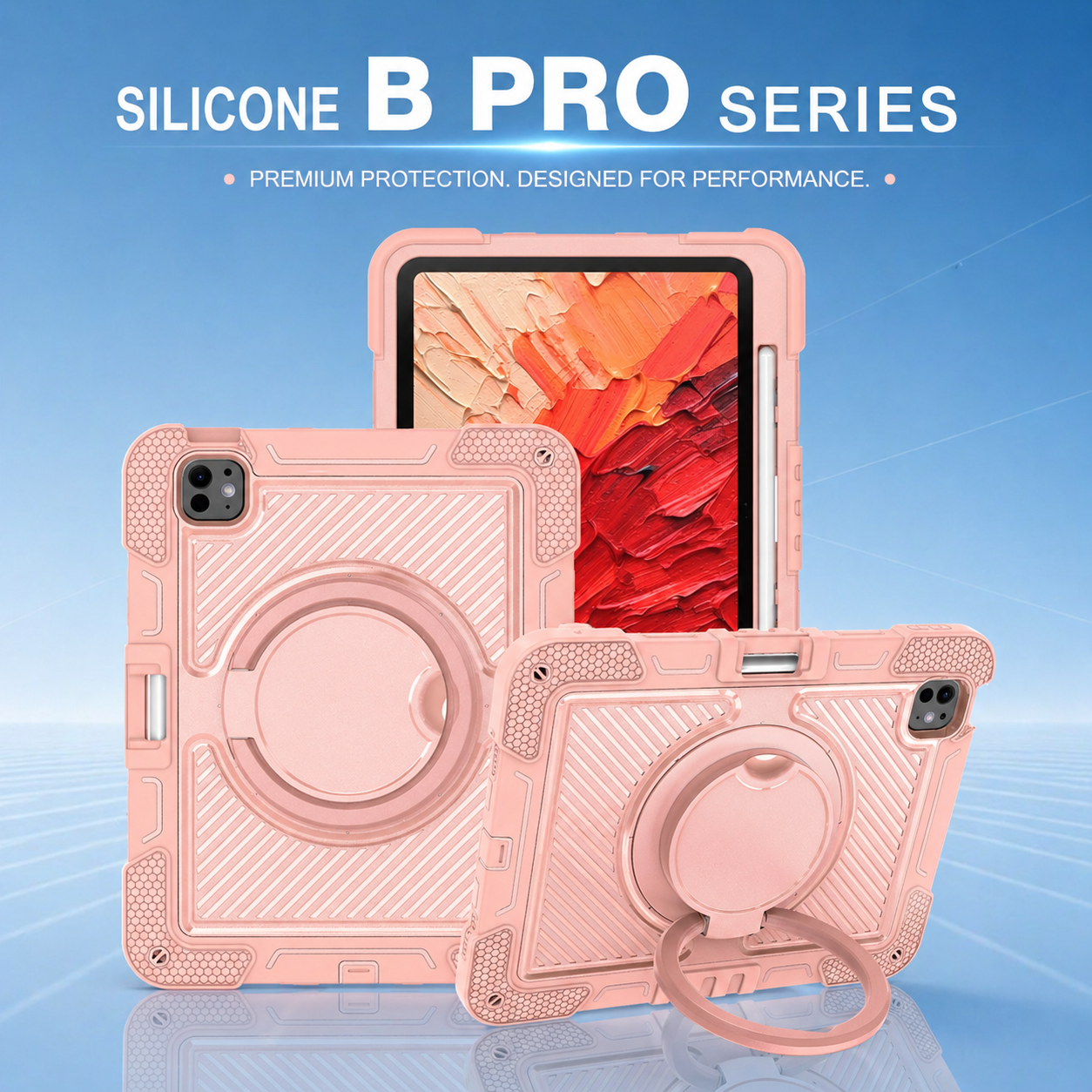
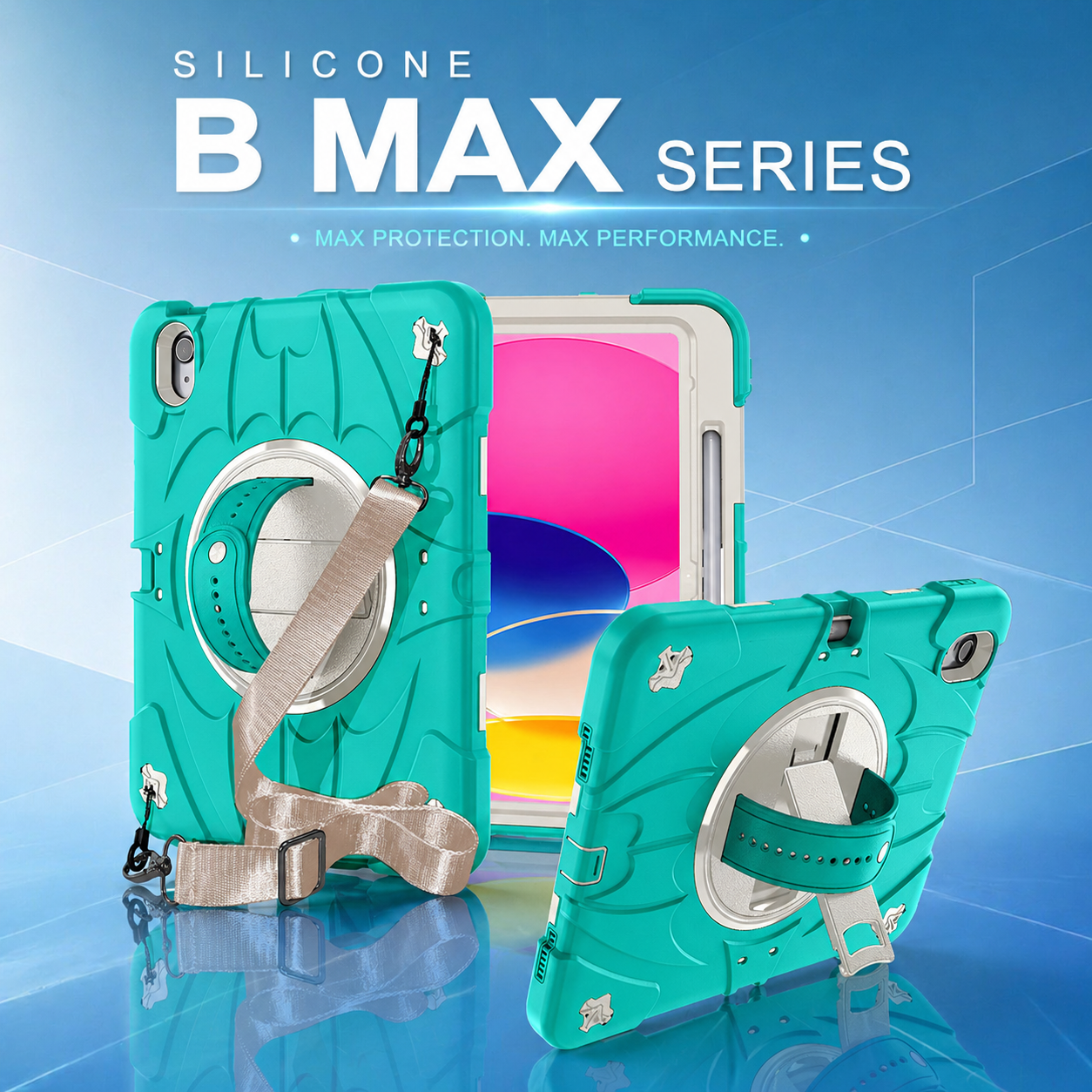
Stands, rotating hand grips, strap anchors, pencil holders, and mounting interfaces will carry more product value. These parts transform a protective enclosure into a productivity tool. A multi angle kickstand tablet case can support video calls, inspection forms, training, point-of-service work, and mobile data entry. Buyers will expect stable angles, controlled hinge resistance, long cycle life, and reliable operation on uneven surfaces.
Modular interfaces will allow one base product to accept different accessories. This can reduce tooling investment, simplify inventory, and support replacement parts. Distributors may stock a common case and configure it for education, logistics, healthcare, or retail by changing the strap, stand, mount, or packaging. Manufacturers that standardize these interfaces can shorten development time for new tablet models.
Digital Development Will Shorten Product Cycles
Three-dimensional scanning, parametric modeling, simulation, and rapid prototyping will help factories respond to frequent tablet launches. Digital tools will not eliminate physical validation: button response, material feel, stand stability, assembly force, and real-world drops still require production-intent samples. Their value is finding problems earlier and reducing tooling revisions.
Buyers Will Demand Better Evidence
Enterprise customers are becoming more disciplined about qualification. Marketing terms such as “rugged” or “heavy duty” are not enough without a clear explanation of test conditions and product limitations. Buyers will request dimensional reports, cycle tests, material information, cleaning compatibility, drop-test methods, and approved samples. Suppliers that maintain traceable specifications and change-control records will have an advantage in repeat programs.
Quality expectations will extend into packaging and logistics. Cases can deform when compressed, colors can shift between batches, and accessory kits can be packed incorrectly. Production controls should therefore cover raw materials, molding, assembly, printing, packaging, and shipment preparation. For private-label customers, artwork accuracy and retail presentation can be as important as mechanical performance.
Sourcing Strategy Will Move Beyond Unit Price
Through 2030, business buyers will place more weight on total lifecycle cost. The lowest quotation can become expensive when a product causes installation delays, blocks charging docks, fails in the field, or cannot be reordered consistently. Supplier evaluation should include engineering capability, prototype speed, process ownership, communication, capacity, corrective-action discipline, and support for device refreshes.
Material volatility and changing trade conditions will encourage clearer forecasting and stronger supplier relationships. A practical resilience plan identifies critical materials, tooling ownership, safety stock, and shipping alternatives before disruption occurs.
Strategic Recommendations
Manufacturers should invest in modular platforms, application research, reliable test methods, and faster design-for-manufacturing workflows. They should also develop clear packages for OEM, ODM, and private-label customers, including drawing control, sample approval, packaging, and after-sales support. Distributors and brands should define use cases before requesting quotations and should evaluate samples with real tablets, mounts, chargers, and users.
The outlook is positive for suppliers that treat protection as part of enterprise productivity. Growth will not be distributed evenly. Commodity products will remain price sensitive, while customized, multifunctional, and well-documented solutions will capture more value. The most successful companies will connect material engineering, user ergonomics, manufacturing discipline, and supply-chain reliability into one repeatable product-development system.





.png)
+86 13422271740
.png)
info@tongmeitech.com
.png)
No. 34, Mashe Section, Guihe Road, Lishui Town, Foshan, Guangdong, China